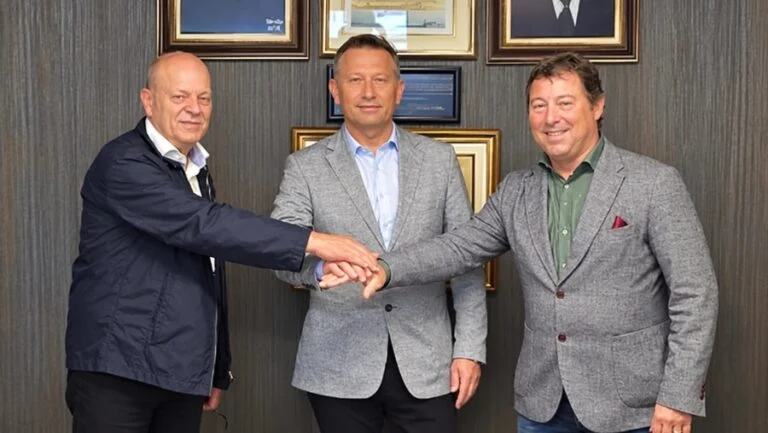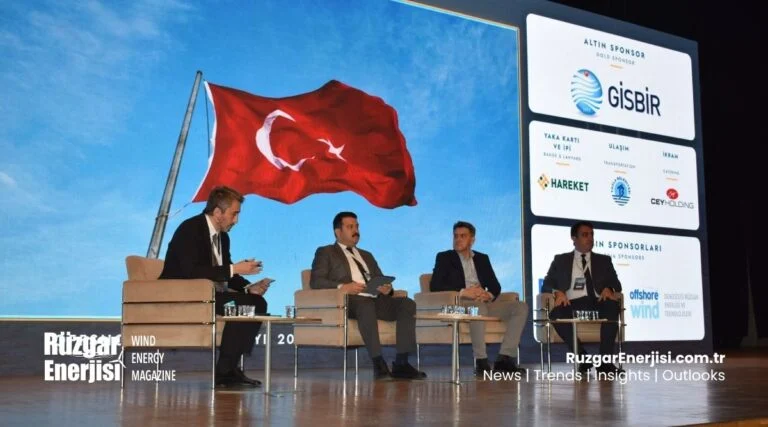


Aydın Erdemir, Former Chairman of TÜRKLİM, emphasised that offshore wind projects depend on ports at every stage, from surveys and installation to operation, maintenance and repair. Speaking during Offshore Wind Türkiye 2026, Erdemir said preparing Türkiye’s port industry for this emerging sector requires an assessment of existing facilities and their development needs.
In an interview with Mesut Kul, Founder and General Manager of Moneta Media Group, during Offshore Wind Türkiye 2026, Aydın Erdemir, Former Chairman of TÜRKLİM, discussed the role of ports in offshore wind investment and the preparations needed across Türkiye’s port industry.
Opening the interview, Kul noted that ports become even more important when offshore wind is involved. He invited Erdemir to explain their role and share his message with participants at the second edition of the event in Türkiye.
Ports support the entire project lifecycle
Erdemir explained that a port is both the starting point and the finishing point of a project carried out at sea. Such projects are built using specialised offshore vessels with different capabilities. Ports provide the bases where these vessels berth, collect equipment, depart for the project site and return after completing their work.
For this reason, he said, offshore projects should also be understood as maritime and port projects. He emphasised that an offshore project cannot be delivered without a port.
The role of ports extends well beyond construction, Erdemir added. They support the earliest surveys above and below the water, installation, commissioning and the subsequent maintenance and repair period, which can last around 30 years. While an onshore project may be developed without a port, he said, the same is not possible for a project at sea.
Offshore wind requires a different type of port infrastructure
Erdemir said offshore ports differ from conventional cargo ports in their technical specifications, operational requirements and space needs.
He recalled that offshore ports have served the oil and gas industry since the 1950s, pointing to examples in the North Sea, the Gulf of Mexico and other regions. He also identified Filyos Port as an example in Türkiye.
Offshore wind, however, has expanded particularly strongly over the past 20 years and requires a different approach to port development and operations. Erdemir said Türkiye did not yet have an offshore wind port and that work in this area would progress alongside the development of offshore wind projects.
Existing ports are assessed first
Describing international practice, Erdemir explained that existing ports are examined once offshore project areas have been announced. Their shortcomings, required upgrades and opportunities for development are then identified.
Following these assessments, options include upgrading existing ports, developing new ports or designing facilities specifically for the projects concerned. He stressed that ports must also be located within suitable distances of the project areas.
When Kul described ports as a “gateway” for these projects, Erdemir agreed and reiterated their essential role in offshore wind investment.
Port arrangements must be addressed alongside tender preparations
Asked what participants could expect from the event’s port session, Erdemir said that if a tender takes place in Türkiye in the first quarter of 2027, the associated port arrangements must also be addressed.
He highlighted the need to determine where the investors and consortia participating in—and ultimately winning—the tender would work, and which ports they would use. The port session, he explained, was intended to raise awareness of these requirements.
Erdemir said TÜRKLİM, alongside his own work as a specialist in the field, was helping to build this awareness in Türkiye. This includes encouraging ports to assess their potential role in offshore wind and determine how any shortcomings could be resolved.
Port options are being studied, including Çandarlı
Erdemir said the preparation process had already begun, with several companies examining port options. These studies consider suitable locations and opportunities to develop new ports, with Çandarlı among the leading locations under consideration.
He emphasised that port investment and offshore wind projects are complementary. The two sectors, he said, will develop together and move forward together. Their relationship and the industry’s preparation needs would be among the topics discussed at the event.
International expertise will support Türkiye’s port industry
Erdemir noted that international specialists were also taking part in the event. He identified the United Kingdom, Germany, the Netherlands and Denmark as countries with particularly well-developed offshore wind port sectors.
Experts from engineering firms involved in the design, project development and operation of offshore wind ports would share their experience, he said. Discussions with these specialists would help prepare Türkiye’s port industry for offshore wind, a process he described as part of their responsibility.
The interview concluded with Kul thanking Erdemir for his contribution and both speakers exchanging their best wishes.

Author
Mesut Kul



 Rüzgar Enerjisi (Wind Energy)Wind Energy Turkey · Ekim 2026 · Özel EkRead the latest issue free →