

Contents
The opening speeches at Offshore Wind Türkiye 2026 addressed the development of offshore wind energy through industrial capacity, maritime infrastructure, skilled personnel and international cooperation. The use of artificial intelligence in energy management and the involvement of local stakeholders in projects were also discussed.
ISTANBUL, 13 October 2026 — The opening speeches at Offshore Wind Türkiye 2026 highlighted the need for cooperation between the energy sector, the maritime sector, industry and universities to support the development of offshore wind investments. Discussions addressed how Türkiye’s manufacturing and engineering experience in onshore wind could be applied to offshore projects. Ports, shipyards, logistics services and skilled personnel were identified as key components of this process.
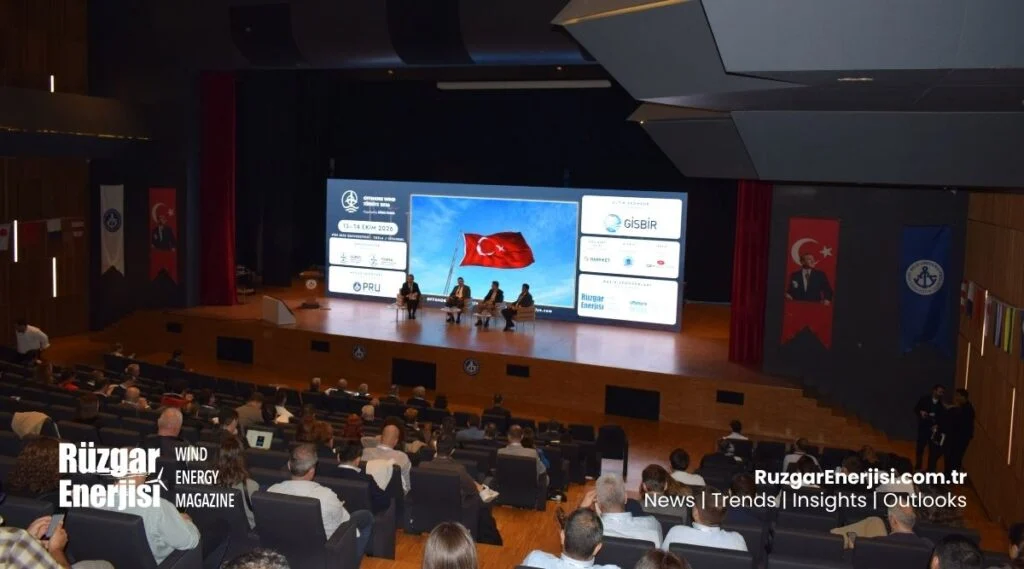
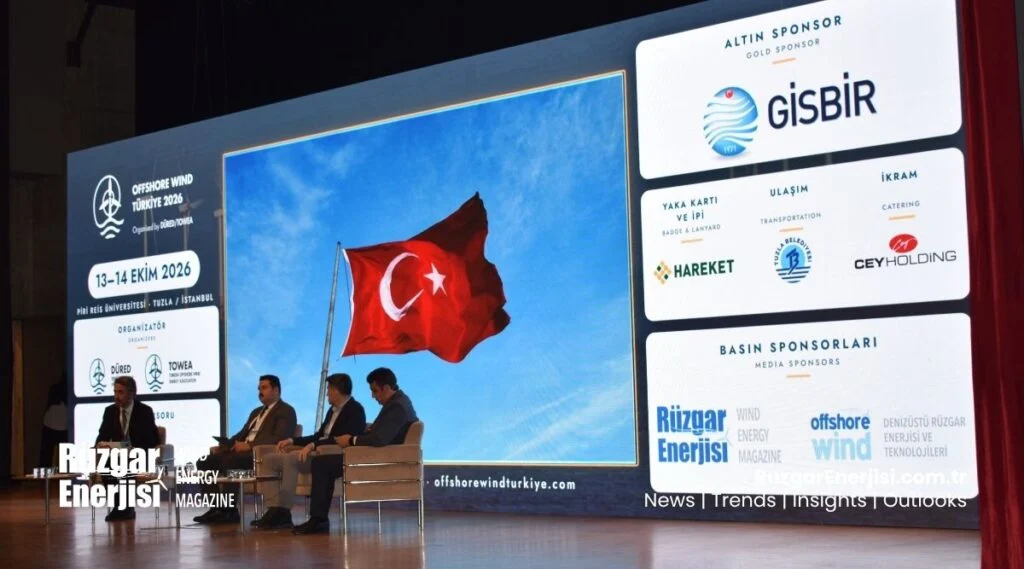
Organised by the Offshore Wind Energy Association (DÜRED) at Piri Reis University in Istanbul on 13–14 October 2026, the event addresses the links between the energy and maritime sectors. The opening speeches highlighted the need to consider industrial infrastructure, university research activities and professional skills together when developing offshore wind energy.
The role of regional development agencies
The shared event programme lists the first session as “Regional Development Agencies and Their Role in the Development of Renewable Energy Sources”. The moderator is listed as Mevlana Celaleddin Kaplan, Head of Innovation and Technology at the Istanbul Development Agency (İSTKA).
The speaker list includes Dr. H. Kerem Öner, Head of the Energy and Industry Unit at the South Marmara Development Agency; Dr. Sena Gürsoy, Investment Support Office Specialist at the İzmir Development Agency; and Jabrail Aliyev, Head of the Project Management Department at the Azerbaijan Renewable Energy Agency.
Manufacturing and maritime infrastructure for offshore wind energy
The opening remarks emphasised that the industrial expertise developed in onshore wind should also be considered for offshore applications. Activities ranging from turbine component manufacturing to maritime services were discussed together. In this context, the manufacturing, transport and service capacity associated with energy generation was also identified as a consideration for offshore projects.
The opening discussions brought together industrial activities associated with the development of energy investments. Applying Türkiye’s existing manufacturing experience to new applications was addressed in the context of the need for cooperation between sectors.
The role of ports and shipyards was among the topics addressed. Speakers highlighted the need to bring together Türkiye’s wind energy experience and the technical capabilities of its maritime sector. The participation of representatives from different sectors at the same event was viewed as an opportunity to examine the relationships between these areas.
The opening speeches also noted that offshore wind energy requires contributions from several sectors. Shipbuilding, manufacturing, engineering, logistics and specialist services were listed in this context. Alongside technological equipment, attention was drawn to the need to train engineers, technicians, researchers and maritime professionals who can work on projects.
Technology development and workforce training at universities
Discussions on the role of universities linked the energy transition to energy security, action on climate change, the future of industry and economic competitiveness. Renewable energy, electrification and digitalisation were considered together. Offshore wind technologies were addressed as a field requiring collaboration across different scientific and engineering disciplines.
Universities were described as having a responsibility to generate knowledge and develop technology as well as to transfer knowledge. The links between energy, digitalisation and research activities were highlighted. Training skilled personnel and developing technology were presented as complementary university responsibilities.
The relationships between maritime disciplines, electrical and electronics engineering, and other technical fields were also discussed. Offshore energy applications were described as extending beyond a single area of expertise. The need to consider research, education and industry experience together was addressed in connection with the workforce discussions during the opening.
Artificial intelligence and energy management
The opening also addressed the opportunities offered by artificial intelligence for optimising energy generation, managing energy systems and improving energy use efficiency. At the same time, speakers noted that the energy requirements of AI applications themselves should be taken into account. These two aspects were considered through the relationship between sustainability goals and energy consumption.
The discussion of energy policy highlighted the importance of managing energy intelligently, efficiently and sustainably alongside the volume of energy produced. University research and technology development activities were linked to this framework. The use of digital technologies in the energy sector was therefore presented as part of the education and research agenda.
Local participation and international experience
The speeches emphasised the need to involve coastal communities, fishing activities and other maritime stakeholders in the early stages of projects. Local communities were described as needing to benefit from the energy transition as well as host it. The social dimension of projects was considered alongside technical and industrial requirements.
International and regional cooperation was also a shared theme of the opening. Discussions focused on exchanging experience and developing relationships in supply chains, manufacturing and technology. Speeches addressing financing pressures and supply chain challenges highlighted the importance of stable policies and long-term industrial confidence for project implementation.
The framework presented during the opening described offshore wind development as a process encompassing turbine technology, maritime infrastructure, industrial production, research, education and local participation. Cooperation between public institutions, industry, universities and professional organisations emerged as the connection between these areas.

Author
Mesut Kul




 Rüzgar Enerjisi (Wind Energy)Wind Energy Turkey · Ekim 2026 · Özel EkRead the latest issue free →